
Pakistan capital Islamabad is emerging as the leading venue for the next round of technical negotiations between the US and Iran, a media report said Sunday.

In the present hyper-connected world, there are many domestic and global factors that affect financial markets. Of them, the most powerful and often least predictable are geopolitical events, which often boil down to one diplomatic headline.

Iran's national soccer team, currently training in Tijuana, Mexico, will be able to enter the US the day before each of their three World Cup matches, the Department of Homeland Security said on Tuesday.

Iranian Parliament Speaker Mohammad Bagher Ghalibaf stressed on Friday (local time) that Tehran remains prepared for "full-scale defence" should the US betray the Memorandum of Understanding signed by the two countries last month.

Bangladesh is actively pursuing a cricket series against India in September, utilising sports diplomacy to mend strained bilateral ties following a controversy involving Mustafizur Rahman and Bangladesh's subsequent T20 World Cup boycott.

In a major shift in Middle Eastern energy and security dynamics, the US Department of the Treasury on Monday issued a temporary 60-day general licence authorising transactions related to the production, delivery, and sale of Iranian crude oil, petrochemicals, and petroleum products.
In a significant diplomatic development, US and Iranian negotiators have reportedly reached a tentative 60-day memorandum of understanding (MoU) aimed at extending a fragile ceasefire and paving the way for formal talks regarding Iran's nuclear programme.

Despite outward displays of cordiality, a formal visit by King Charles III to the US revealed underlying tensions between the leaders, highlighted by subtle rebukes and contrasting views on key issues.

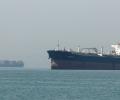
The United States on Saturday (local time) launched a third round of strikes against Iran after alleging that Iran's Islamic Revolutionary Guard Corps (IRGC) attacked the Cyprus-flagged container vessel M/V GFS Galaxy in the Strait of Hormuz.

Iran was the chance to arrange a concert of nations, to actually be a Vishwaguru. Instead, we are watching from the sidelines as Pakistan, the same country that is apparently still at war with Afghanistan, hosts talks between US-Israel and Iran. The irony is hard to miss, points out Amberish K Diwanji.

Tensions in West Asia have dramatically escalated as Israel launched targeted military operations against Iran, triggering widespread blasts across strategic cities, following earlier Iranian projectile attacks on Israel.

Iran's Supreme Leader Mojtaba Khamenei will not attend his father, former Supreme Leader Ali Khamenei's, funeral due to security concerns stemming from Israeli threats. This decision follows a sharp warning from Iran's Foreign Minister to the United States, urging it to control Israel after its Defence Minister reportedly marked Khamenei for death. The incident highlights escalating tensions and ongoing diplomatic efforts to de-escalate hostilities in West Asia.

Pakistan's Interior Minister Mohsin Naqvi visited Tehran for the third time recently to mediate peace amidst rising tensions between the US and Iran. Pakistan is actively leading diplomatic efforts to de-escalate the conflict in West Asia, which has impacted global energy markets and trade.

Islamabad's attempt to position itself as a mediator in the West Asia conflict has come to naught with the Iranian side refusing to meet any US-led delegation in Pakistan, reports the Wall Street Journal.

Italian Prime Minister Giorgia Meloni has strongly rebuked former US President Donald Trump's claims that she 'begged' for a photo-op at the G7 summit, dismissing his remarks as 'utterly fabricated' and asserting, 'Italy and I never beg.'

US Secretary of State Marco Rubio said that discussions aimed at halting the conflict with Iran have shown "some slight progress," while simultaneously echoing Washington's dissatisfaction with its NATO allies.

The latest development comes as diplomatic efforts between Washington and Tehran continue despite renewed hostilities. CNN reported that US and Iranian officials are still working towards a nuclear agreement by mid-August, even as preparations for possible military action have continued in parallel.

Iran's Persian Gulf Strait Authority (PGSA) has declared the Strait of Hormuz closed due to 'recent illegal movements' by the US military, demanding transit permits, while the US Central Command (CENTCOM) insists the strait is 'open to all vessels' and vows to ensure 'freedom of navigation'.

Indian benchmark equity indices, Sensex and Nifty, saw early gains driven by strong buying in blue-chip bank stocks, fresh foreign fund inflows, and a decline in global crude oil prices, boosting investor confidence.

Pakistani Prime Minister Shehbaz Sharif has briefed Saudi Crown Prince Mohammad bin Salman on Pakistan's diplomatic efforts to de-escalate the situation in West Asia. This follows Pakistan's offer to host talks between the US and Iran to resolve the ongoing conflict.

Officials from Pakistan, Afghanistan, and China are meeting in Urumqi to discuss regional security concerns and potential confidence-building measures.

Gold prices in the national capital fell by Rs 600 to Rs 1.64 lakh per 10 grams, influenced by tentative progress in US-Iran negotiations, which reduced demand for precious metals. However, unresolved tensions surrounding the Strait of Hormuz continue to keep traders cautious.

US President Donald Trump announced a finalised peace deal between the US and Iran, set for signing on June 19 in Switzerland, with key figures like J D Vance, Steve Witkoff, and Jared Kushner from the US side, and Abbas Araghchi and Mohammad Bagher Ghalibaf representing Iran, alongside Pakistani mediators Field Marshal Asim Munir, Shehbaz Sharif, Ishaq Dar, and Mohsin Naqvi, playing crucial roles in the diplomatic breakthrough.

A senior Russian diplomat has expressed apprehension over the possibility of the US attempting to regain control of the Bagram airbase in Afghanistan, amidst escalating military tensions in the region.

Indian benchmark indices, Sensex and Nifty, staged a moderate rebound after a significant correction in the previous session, driven by foreign fund inflows and a largely positive trend in global markets, though geopolitical tensions between the US and Iran continued to foster caution.

Ebrahim Azizi, Head of the Iranian Parliament's National Security Committee, warned the US against interfering with the Strait of Hormuz, asserting Iran's sovereignty after former President Donald Trump threatened to 'take over' the strategic waterway. Despite the heated rhetoric, Iran and the US have established a direct communication line to prevent incidents during a 60-day negotiation period.

Tensions escalate between Iran and the US over control of the Strait of Hormuz, a crucial shipping lane for global oil supplies, as both sides discuss extending a fragile ceasefire.

Pakistan's Prime Minister Shehbaz Sharif chaired a high-level meeting to review regional and internal security in light of recent events in Iran and Afghanistan.

Iran has formally turned down a proposal from the United States for a 48-hour ceasefire, according to Al Jazeera, citing reports from the semi-official Fars news agency.

Indian benchmark indices Sensex and Nifty experienced a significant slump, with the Sensex tumbling 719.08 points, driven by escalating West Asian tensions, a sharp rise in crude oil prices, and a global sell-off in technology stocks.
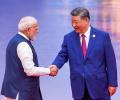
India's dual pursuit of a robust strategic partnership with Washington and a pragmatic, tension-management policy with Beijing represents the essence of modern multi-alignment. By embracing economic pragmatism, learning to compartmentalize political differences, and engaging in continuous dialogue, India can secure its borders, grow its economy, and contribute to a stable, multipolar Asian century, points out Ambassador Rajasekhar.

India has strongly protested a US military strike on the commercial vessel Settebello off the Oman coast, which left three of the 24 Indian crew members missing. The US Central Command stated it disabled the Palau-flagged vessel for violating a blockade of Iranian ports.

Pakistan Prime Minister Shehbaz Sharif announced that a US-Iran peace deal is on the verge of finalisation, potentially within the next 24 hours, marking a significant diplomatic breakthrough after months of intense negotiations.

US Vice President J D Vance is currently in Switzerland, leading critical technical talks with Iran to advance diplomatic efforts on Iran's nuclear programme and secure a lasting ceasefire in Lebanon, following a recently signed memorandum of understanding aimed at de-escalating West Asian hostilities.

External Affairs Minister S Jaishankar has affirmed India's commitment to ensuring issues like a free, open, and rule-based maritime order, seafarer safety, and countering terror financing receive due attention at the UN Security Council during its 2028-29 term.

Indian Hotels Company Ltd (IHCL) is expected to benefit from higher room rates, rising occupancy, and strategic acquisitions, with analysts projecting double-digit revenue growth for FY27 driven by strong domestic demand and a favourable demand-supply dynamic.

Top leaders from the US, Iran, and Pakistan, along with other nations, have gathered in Switzerland for high-level talks aimed at restoring peace in West Asia. These negotiations follow a recently signed Memorandum of Understanding between the US and Iran, initiating a 60-day window for a deal. Discussions focus on Iran's nuclear programme and the fragile interim peace deal, amidst renewed tensions and the fluctuating status of the Strait of Hormuz.

Kolkata Knight Riders have signed Zimbabwe fast bowler Blessing Muzarabani as a replacement for Mustafizur Rahman for IPL 2026, which is scheduled to start on March 28.

Donald Trump issued a fresh warning to Iran as negotiations remained deadlocked over uranium stockpiles, sanctions relief and war compensation. The US President's sharp remarks came just hours after Iranian media revealed Washington's core conditions for resuming negotiations.

Iran's state broadcaster denies sending a diplomatic delegation to Pakistan for talks with the US, despite reports suggesting otherwise. This denial comes amid escalating tensions and aggressive rhetoric from Washington, even as signs of potential diplomatic movement emerge.
